Thursday, November 29, 2012

Global Government Now Seeks Total Control Over the Internet

Global Government Now Seeks Total Control Over the Internet


by J.D. Heyes
Natural News
November 28, 2012

What is arguably the very last bastion of totally free speech is once again under assault by the world’s tyrants, as the United Nations is now eying regulation of the Internet – as though it was in need of being regulated.
Why? It’s an age-old story.
Leaders of authoritarian regimes the world over hate the free flow of information that is disseminated via the Internet.
They hate the fact that they no longer have a monopoly on ideas and opinion within their own country. They see notions of freedom and liberty as a threat.
They despise any medium that undermines their grip on power. And their regimes are heavily represented in the U.N., of which the United States (once considered the bastion of liberty and freedom) is the largest contributor.
“Who runs the Internet? For now, the answer remains no one, or at least no government, which explains the Web’s success as a new technology. But as of next week, unless the U.S. gets serious, the answer could be the United Nations,” reports The Wall Street Journal.
Authoritarians seek ways to control free expression, free speech, and individual liberty
A sizable number of the world body’s 193 members simply oppose the open and very uncontrolled nature of the Internet, the paper said, noting the World Wide Web’s interconnected global networks that defy international boundaries and, as such, make it extremely difficult for governments to tax or censor.
For over a year, these authoritarian regimes have lobbied a UN agency known as the International Telecommunications Union to grab the reins of the Internet and take over its management.
The organization, which was originally created in 1865 as the International Telegraph Union, last wrote a treaty on communications in 1988, years before the commercial Internet developed into a popular communications and commerce medium, and back when telecommunications referred to voice telephone calls routed through national telephone monopolies.
In the coming days, the ITU plans to hold a “negotiating conference” in the emirate of Dubai, say reports. In the past months, rumors have surfaced that a new treaty could be in the offing – one that will no doubt prove disastrous to a free and open Internet.
Most U.S. resolutions, as well as free-market commentary in publications such as the Journal, “have focused on proposals by authoritarian governments to censor the Internet,” the paper reported. “Just as objectionable are proposals that ignore how the Internet works, threatening its smooth and open operations.”
What would be the effect of having the Internet “reviewed” and “regulated” by global bureaucrats, most of whom are sympathetic to, or beholden to, authoritarian regimes bent on stifling free speech, free expression and individual liberty.
The Internet consists of 40,000 networks, interconnected among 425,000 global routes that cheaply and inefficiently deliver messages and digital content to about two billion people around the world every day – with a half-million signing on each day.
Up to now, the Internet has been self-regulating, which has obviously been working just fine (hence the growth figures in the previous paragraph).
As it stands, no one has to ask for permission to put up their own blog or website. No government has the ability or right to tell network operators how they should do their jobs.
‘Technology moves faster than any treaty process’
What has transpired is an extremely rare, if virtual, place for innovation that requires no prior permission from a regulatory or government agency or bureaucrat or governing body.
Former Federal Communications Commission Chairman William Kennard pointed out that 90 percent of cooperative “peering” agreements among co-existing networks are “made on a handshake,” adjusting as needs change.
“The Internet is highly complex and highly technical, yet governments are the only ones making decisions at the ITU, putting the Internet at their mercy,” Sally Wentworth of the Internet Society told the Journal recently.
She went on to say that Web developers and engineers who make the Internet work have said it’s “mind boggling” that any government – even a so-called world government – would ever claim the universal right to regulate or manage the Internet.
“Technology moves faster than any treaty process ever can,” Internet Society warned.
Even if the Obama administration hasn’t yet publicly stated its position, liberty-minded officials and lawmakers in Europe (believe it or not) have stepped up to the plate.
The European Parliament has passed a resolution that protests plans by the ITU to seize control of the Internet.
“[The European Parliament] believes that the ITU, or any other single, centralized international institution, is not the appropriate body to assert regulatory authority over either Internet governance of Internet traffic flows,” says the resolution, which was passed by a majority of EP representatives, reports said.
Biggest backers of regulation include Russia, China
According to Britain’s The Guardian newspaper:
What’s worrying the EP, along with an unlikely coalition of Google, the U.S. Republican party, organized labor, and Greenpeace, is that the meeting might try and take over regulatory oversight for Internet communications in a closed-door coup. The U.S. government has said it will oppose serious moves to change the current regulatory order, but how effective that will be remains to be seen.
“The resolution of the Parliament is a big success for internet users. This sends a clear and positive signal to the European Commission and the Member States”, said Amelia Andersdotter, MEP for the Pirate Party and co-submitter of the resolution, The Register reported.
Some of the biggest backers of unmitigated Internet regulation include, not surprisingly, the authoritarian regimes of Russia and China.
As we’ve said, the Internet is truly the last bastion of genuinely free speech and expression, not to mention a tremendous creator of commerce and wealth. Regulating the Internet will have exactly the same effect as regulations on industry have had – it will stifle creativity, curb freedoms, kill jobs and destroy economic growth.
We’ll be keeping an eye on this very important issue.
Sources:
http://online.wsj.com
http://www.weeklystandard.com
http://www.forbes.com
http://www.theregister.co.uk

Antarctic Melting and Sea Level

Antarctic Melting and Sea Level

Due to its location at the South Pole, Antarctica receives relatively little solar radiation. This means that it is a very cold continent where water is mostly in the form of ice or snow. This accumulates and forms a giant ice sheet which covers the land. New data which more accurately measures the rate of ice-melt could help us better understand how Antarctica is changing in the light of global warming. The rate of global sea level change is reasonably well-established but understanding the different sources of this rise is more challenging. Using re-calibrated scales that are able to weigh ice sheets from space to a greater degree of accuracy than ever before, the international team led by Newcastle University has discovered that Antarctica overall is contributing much less to the substantial sea-level rise than originally thought.


Instead, the large amount of water flowing away from West Antarctica through ice-melt has been partly cancelled out by the volume of water falling onto the continent in the form of snow, suggesting some past studies have overestimated Antarctica’s contribution to fast-rising sea levels.

Using Gravity Recovery and Climate Experiment (GRACE) satellite data, the team calculated ice sheet mass loss by more accurately mapping and removing the mass changes caused by the flow of rock beneath Earth’s surface.

Publishing their findings in the academic journal Nature, project lead Professor Matt King said the data meant we were at last close to understanding how Antarctica is changing.

"We have tried to weigh the ice in the past but GRACE only measures the combined effect of the ice changes and the land mass changes occurring beneath the Earth’s surface," explains Professor King, Professor of Polar Geodesy at Newcastle University. "The step forward we have made is to provide a better calculation of the land mass changes so we can correct the satellite measurements to more accurately calculate the changes in ice mass alone."

"Our ice change calculations rely heavily on how well we can account for these important changes taking place beneath the Earth’s surface.  While the land beneath the ice is moving by no more than a few millimetres-per-year — the thickness of a fingernail —that seemingly small effect significantly alters the rate at which we estimate the ice is changing."

"By producing a new estimate of the land motion we’re effectively re-calibrating the scales — in this case the GRACE satellite —so we can more accurately weigh the ice.  And what we’ve found is that present sea level rise is happening with apparently very little contribution from Antarctica as a whole."

"We’re now confident it is shrinking," says Professor King.  "Our new estimate of land motion helps us narrow the range and shifts the best estimate to the lower end of the ice melt spectrum."

"Worryingly, though, the rate of shrinking has sped up in some important locations. The parts of Antarctica that are losing mass most rapidly are seeing accelerated mass loss and this acceleration could continue well into the future."

"The sea level change we’re seeing today is happening faster than it has for centuries with just a small contribution from the massive Antarctic ice sheet. What is sobering is that sea levels will rise even faster if Antarctica continues to lose increasingly more ice into the oceans."

Sea levels around the world are rising.  Between 1870 and 2004, global average sea levels rose 17 cm as reported in 2006 in  Geophysical Research Letters.  From 1950 to 2009, satellite data showed a rise of 3.3 ± 0.4 mm from 1993 to 2009.  In 2007, the Intergovernmental Panel on Climate Change (IPCC) projected that during the 21st century, sea level will rise another 18 to 59 cm (7.1 to 23 in).

Ice sitting on the Antarctic continent at the peak of the last ice age 20,000 years ago forced the rock beneath to deform and slowly flow away. After that time ice levels generally reduced and the rock within the Earth's mantle more than 100km below the surface has been slowly flowing back in. That change affects the GRACE satellites in exactly the same way as ice moving into and out of the continent and it has to be factored in to get an accurate measurement of the total ice.

For further information see Sea Levels.

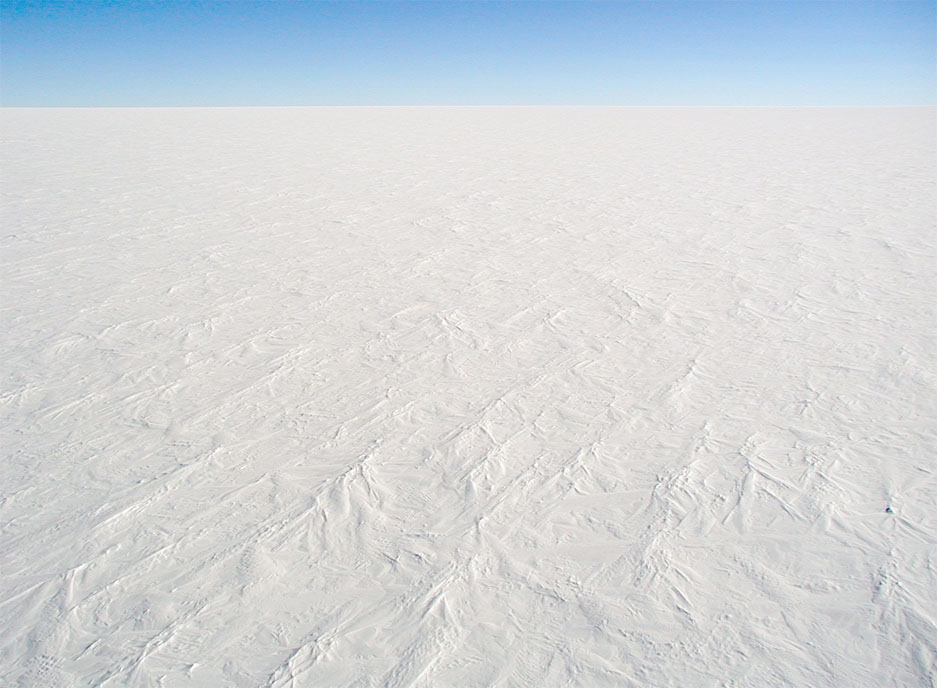
Antarctica image via  Wikipedia.

ObamaCare- Medical Tyranny is Here in USA

Daniel Taylor
Infowars.com
November 29, 2012

Health care reform is a hot topic today, as it has been for much of America’s history. Benjamin Rush, one of the signers of the Declaration of Independence, warned in 1787 that medical freedom needed to be included in the American Constitution. Without this protection, Rush warned that the medical establishment would naturally progress – as many of mankind’s institutions do – into an oppressive dictatorship. His words, echoing from over 200 years ago, ring strikingly true today:
photoBenjamin Rush, Founding Father .
“The Constitution of this Republic should make special provision for medical freedom. To restrict the art of healing to one class will constitute the Bastille of medical science. All such laws are un-American and despotic. … Unless we put medical freedom into the constitution the time will come when medicine will organize into an undercover dictatorship and force people who wish doctors and treatment of their own choice to submit to only what the dictating outfit offers.”
The spirit of managerial scientific control that drives this beast is summarized in the words of Frederick Taylor, a pioneer in “scientific management.” As Taylor stated in 1907, ”Too great liberty results in a large number of people going wrong who would be right if they had been forced into good habits.” This spirit of quasi-altruistic scientific control begins to fade away towards the higher ranks of the system, however.
The potential for medical tyranny that Benjamin Rush perceived over 200 years ago crystallized when the Rockefeller and Carnegie foundations transformed the American medical establishment in the early 20th Century. They strove to create a system of schooling to manufacture a predictable, rule following group of professionals to enforce the establishment regulations. Additionally, tax exempt foundations – through their grant making power – are able to mold the idea-sphere from which medical research emerges, or is suppressed.
The dictatorial health care model as expressed by “obamacare” is being implemented as part of a larger global program. The World Health Organization announced recently that it hopes to implement – via a U.N. resolution – “universal health coverage” across the globe in fulfillment of its Millennium Development Goals. The Rockefeller Foundation is working with WHO in the project. “There is a global movement towards UHC (Universal Health Care) and it is gathering momentum,” said Judith Rodin, President of the Rockefeller Foundation.
If you don’t want the kind of care that the allopathic establishment prescribes, be prepared to face the consequences.
A Minnesota mother was recently brought to court over refusing chemotherapy for her 8 year old daughter. A doctor apparently reported her to CPS. She was “…ordered into court and told if they did not work with them on a treatment plan, they would lose custody of Sarah.”
Another case involved a Pennsylvania mother who declined to vaccinate her child, resulting in a visit from CPS. 
A 2009 case in which a 13 year old boy’s parents refused chemo resulted in a judgement of “medical neglect,” denying the right of his parents to refuse treatment on religious grounds.
The bottom line is this: Even if the medical establishment had our best interests at heart, what happens when their science is wrong? What happens when it is skewed in favor of the corporations that are closely aligned with them? What kind of damage is done when it is universally enforced? Benjamin Rush foresaw this danger, and it is time to face it for the reality it has become.

2012 heading for top 10 warmest years globally, UN reports

DOHA, Qatar -- Despite cooling from La Nina early in the year, 2012 is on track to become one of the top 10 warmest years on record, with the U.S. experiencing extreme warmth and Arctic Sea ice shrinking to its lowest extent, the U.N. weather agency said Wednesday.
In a statement released at international climate talks in Qatar, the World Meteorological Organization said the "alarming rate" of the Arctic melt highlights the far-reaching changes caused by global warming.
"Climate change is taking place before our eyes and will continue to do so as a result of the concentrations of greenhouse gases in the atmosphere, which have risen constantly and again reached new records," WMO Secretary-General Michel Jarraud said.
Delegates from nearly 200 countries are meeting in Doha, Qatar, to discuss ways of slowing climate change, including by cutting emissions of greenhouse gases that scientists say are warming the planet, melting ice caps, raising sea levels, and changing rainfall patterns with impacts on floods and drought. Discord between rich and poor countries on who should do what has kept the two-decade-old U.N. talks from delivering on that goal, and global emissions are still going up.
The WMO said global temperatures rose after initial cooling caused by the La Nina weather oscillation, with major heat waves in the U.S. and Europe. Average temperatures in January-October were the highest in the continental U.S., and the ninth highest worldwide, since records began in 1850.
Cyclone activity was normal globally, but above average in the Atlantic, where 10 storms reached hurricane strength, including Sandy, which wreaked havoc across the Caribbean and the U.S. East Coast.
Sandy wasn't the strongest cyclone, though. That was Typhoon Sanba, which struck the Philippines, Japan, and the Korean Peninsula, "dumping torrential rain and triggering floods and landslides that affected thousands of people and caused millions in U.S. dollars in damage," the WMO said.
Related: Permafrost melt needs to be factored into talks, experts say
Droughts impacted the U.S., Russia, parts of China and northern Brazil. Nigeria saw exceptional floods, while southern China saw its heaviest rainfall in three decades.
But of all the weather events in 2012, the most ominous to climate scientists was the loss of ice cover on the North Pole. In September, scientists at the National Snow and Ice Data Center in Colorado said Arctic Sea ice measured 1.32 million square miles — which is 18 percent less than the previous record low, set in 2007. Records go back to 1979 based on satellite tracking.
The scientists said their computer models predict the Arctic could become essentially free of ice in the summer by 2050, but added that current trends show ice melting faster than the computers are predicting.
More world stories from NBC News:

2012 marked by extreme weather, Arctic thaw: UN

2012 marked by extreme weather, Arctic thaw: UN
GENEVA — Extreme temperatures, drought, floods and the unprecedented loss of Arctic ice marked global weather in 2012, boosting concern at the march of climate change, the World Meteorological Organization (WMO) said Wednesday.
"Climate change is taking place before our eyes and will continue to do so," WMO chief Michel Jarraud said, unveiling a weather report that coincided with fresh negotiations on a UN treaty to curb greenhouse gases.
January-October 2012 was the ninth warmest such period since records began in 1850, the WMO said.
The global land and ocean surface temperature over these 10 months was about 0.45 degrees Celsius (0.81 degrees Fahrenheit) above the 1961-1990 average of 14.2 C (57.56 F), it said.
"Notable extreme events were observed worldwide, but some parts of the northern hemisphere were affected by multiple extremes," it said, highlighting these episodes:
- HEATWAVES hit the United States, which registered 15,000 new daily temperature records in March alone, as well as southern Europe, much of Russia and northwestern Asia.
Drought gripped many countries, notably affecting some 9.6 million people in China's Yunnan and Sichuan provinces.
- FLOODING struck many parts of western Africa and the Sahel between July and September, affecting nearly three million people and killing at least 300.
In western Russia's Krasnodar region, July floods killed nearly 200 people and caused property damage worth $630 million (488 million euros).
Parts of southern China experienced their heaviest rainfall in the last 32 years in April and May.
- STORMS left a trail of damage in the Caribbean and US East Coast as the Atlantic basin experienced an above-average hurricane season for the third year in a row.
A total of 19 tropical storms have hit so far, 10 of them hurricanes, the WMO said.
New York Governor Andrew Cuomo on Monday estimated superstorm Sandy's costs at more than $60 billion for New York and New Jersey alone.
The effects were "far more important than (similar hurricanes) 100 years ago," Jarraud said, pointing out that sea levels today are 20 centimetres (eight inches) higher, allowing water to penetrate deeper inland on a storm surge.
The WMO also raised the alarm over unprecedented melt of Arctic sea ice, confirming data published in September by the US National Snow and Ice Data Center.
Arctic sea ice cover shrank to just 3.4 million square kilometres (1.32 million square miles) at its annual low point on September 16 -- 18 percent less than the previous record low in 2007.
The new record was also 49 percent below the 1979-2000 average, corresponding to an additional ice loss of nearly 3.3 million square kilometres -- about the size of India, the WMO said.
"In August, the Arctic sea ice lost an average of nearly 92,000 square kilometres of ice per day -- the fastest observed loss for the month of August on record," the report said.
It pointed to Greenland, whose land-based icemelt is considered particularly serious since it can hike sea levels, saying it registered an all-time heat record for May, when the mercury soared to 24.8 C (76.6 F).
Both the Arctic and the Greenland icesheet appeared to be melting "somewhat faster" than predicted five years ago, Jarraud said, adding that "the trend is not only continuing but accelerating."
He cautioned that the higher temperatures came despite the cooling influence of the La Nina weather phenomenon in the tropical Pacific Ocean at the beginning of the year.
Addressing a familiar question, Jarraud acknowledged that it was hard to attribute any single extreme weather or temperature phenomenon to global warming.
But such events are "not incompatible with global warming" and are "likely to be a consequence of it," he said.
The WMO report, on preliminary weather data for 2012, coincided with the annual UN climate talks, taking place this year in Doha, Qatar.

How Climate Change Could Affect Entire Forest Ecosystems


Droplets caused by fog collect on the needles of this Bishop pine tree on Santa Cruz Island. (Credit: Mariah Carbone)
ScienceDaily (Nov. 28, 2012) — The fog comes in, and a drop of water forms on a pine needle, rolls down the needle, and falls to the forest floor. The process is repeated over and over, on each pine needle of every tree in a forest of Bishop pines on Santa Cruz Island, off the coast of Santa Barbara. That fog drip helps the entire forest ecosystem stay alive.
Thousands of years ago, in cooler and wetter times, Bishop pine trees are thought to have proliferated along the West Coast of the U.S. and Mexico. Now, stratus clouds -- the low-altitude clouds known locally as "June gloom" -- help keep the trees growing on Santa Cruz Island, Santa Rosa Island, and on one island off Baja California. Other than these locations, Bishop pine trees grow only farther north in California where it is cooler and wetter.
Mariah S. Carbone, first author of a new paper, titled "Cloud Shading and Fog Drip Influence the Metabolism of a Coastal Pine Ecosystem," and her co-authors, studied the influence of clouds on the largest Bishop pine forest of Santa Cruz Island. Carbone is a postdoctoral fellow with UC Santa Barbara's National Center for Ecological Analysis and Synthesis (NCEAS). Their study was published in the journal Global Change Biology.
"When people think about climate change, they're often thinking about temperature and precipitation," said Carbone. "When you think about precipitation, it's rain and snow, depending on where you are. What this study showed is that you can have really important water inputs coming from clouds that influence the carbon cycle."
She explained that clouds are one of the largest uncertainties in global climate, and that the forest ecosystem interactions with clouds have a large impact -- one that has rarely been studied before, particularly in Southern California.
Changes in cloudiness or cloud height with global warming will alter the types of forest ecosystems that grow in coastal California, explained Carbone. While predictions about how rainfall will change in California over the next 50 years are uncertain, fog and low-stratus clouds might decline as sea-surface temperatures warm. Like the relict Bishop pines on Santa Cruz Island, and the majestic coastal Redwood forests in Northern California, forests remove and store carbon from the atmosphere, and thus are important for understanding greenhouse gas concentrations in the future. These coastal forests are also highly valued for their aesthetic and recreation qualities.
Fog is often present in coastal California during May through August. It occurs when the land warms in the spring and summer, and moist ocean air is pulled over cold, upwelling coastal waters. This moist air then condenses under a stable atmospheric inversion layer, creating low clouds or fog banks.
"The finding that summer fog strongly impacts carbon cycling highlights the need for improved understanding of whether we should expect coastal summer cloud behavior to change in a warmer world," said second author A. Park Williams, a former graduate student in UCSB's Geography Department, now at Los Alamos National Laboratory. "A change in summer fogginess could produce temperature, moisture, and carbon feedbacks in coastal ecosystems that easily swamp out the effects expected from increased greenhouse gases alone," said Williams.
The carbon cycle involves the movement of billions of tons of carbon between the oceans, lands, and atmosphere every year. Increased amounts of carbon dioxide, a potent greenhouse gas, ¬¬are injected into the atmosphere and contribute to climate change.
The scientists received help from NASA and NOAA in collecting information. "We used satellite data to map the spatial distribution of cloud cover across the western portion of Santa Cruz Island," said senior author Christopher J. Still, formerly an associate professor at UC Santa Barbara, now at Oregon State University. "We had some evidence of a cloud cover gradient from the coast to inland, based on our own observations and our weather station data, but the satellite data -- from NOAA and NASA satellites -- really allowed us to quantify this gradient across the western half of the island and in particular at our two study sites," said Still.
Still said that the authors believe this study is unique in linking clouds to soil microbial activity. "While most previous research on fog and ecosystems has focused on its role in plant-water relations -- such as the well-known linkages between fog and coast Redwoods -- we show that soil microbial activity and metabolism in these coastal ecosystems may be very dependent on the light but frequent fog drip that occurs during the rainless summer months," said Still. The study is also unique in linking fog and low clouds to the carbon cycle of a coastal ecosystem, including its impact on tree growth and soil respiration.
"What we found was that there are two major effects of the clouds," said Carbone. "One is shading, which keeps the temperatures cooler and the soil moisture higher. The other is fog drip, which is a water input into the soil."
The soil moisture content was not depleted as rapidly where the trees were under more cloud cover, and thus they were able to grow longer into the dry season. Water pulses from fog drip immediately stimulated microbes in the litter and soil below, but did not directly enhance pine tree activity. The microbial activity releases carbon dioxide into the atmosphere.
"This study provides us with a greater understanding of how fog and the low coastal clouds which Californians commonly call 'the marine layer' affect plant growth and the activities of microorganisms in the soil," said John Randall, scientist with The Nature Conservancy, which owns and operates Santa Cruz Island in cooperation with the National Park Service and the University of California. "Their findings of the importance of fog and low clouds in influencing plant growth and survival and microbial metabolism in the soil will help us understand how changes in coastal fogs and low clouds that may accompany climate change will affect the forests and soils on Santa Cruz Island, other islands off the coast of California and Mexico, and all along the coast of the adjacent mainland."
The work on Santa Cruz Island, conducted in cooperation with The Nature Conservancy, was funded by grants from the Andrew Mellon Foundation and the Kearney Foundation of Soil Science. The NOAA Climate and Global Change Postdoctoral Fellowship and the National Center for Ecological Analysis and Synthesis have supported Carbone.

Sea Levels Rising Faster Than IPCC Projections


Sea-levels are rising 60 per cent faster than the Intergovernmental Panel on Climate Change's (IPCC) central projections, new research suggests. (Credit: © byheaven / Fotolia)
ScienceDaily (Nov. 27, 2012) — Sea levels are rising 60 per cent faster than the Intergovernmental Panel on Climate Change's (IPCC) central projections, new research suggests.
While temperature rises appear to be consistent with the projections made in the IPCC's fourth assessment report (AR4), satellite measurements show that sea levels are actually rising at a rate of 3.2 mm a year compared to the best estimate of 2 mm a year in the report.
The researchers, from the Potsdam Institute for Climate Impact Research, Tempo Analytics and Laboratoire d'Etudes en Géophysique et Océanographie Spatiales, believe that findings such as these are important for keeping track of how well past projections match the accumulating observational data, especially as projections made by the IPCC are increasingly being used in decision making.
The study, which has been published November 28, in IOP Publishing's journal Environmental Research Letters, involved an analysis of global temperatures and sea-level data over the past two decades, comparing them both to projections made in the IPCC's third and fourth assessment reports.
Results were obtained by taking averages from the five available global land and ocean temperature series.
After removing the three known phenomena that cause short-term variability in global temperatures -- solar variations, volcanic aerosols and El Nino/Southern Oscillation -- the researchers found that the overall warming trend at the moment is 0.16°C per decade, which closely follows the IPCC's projections.
Satellite measurements of sea levels showed a different picture, however, with current rates of increase being 60 per cent faster than the IPCC's AR4 projections.
Satellites measure sea-level rise by bouncing radar waves back off the sea surface and are much more accurate than tide gauges as they have near-global coverage; tide gauges only sample along the coast. Tide gauges also include variability that has nothing to do with changes in global sea level, but rather with how the water moves around in the oceans, such as under the influence of wind.
The study also shows that it is very unlikely that the increased rate is down to internal variability in our climate system and also shows that non-climatic components of sea-level rise, such as water storage in reservoirs and groundwater extraction, do not have an effect on the comparisons made.
Lead author of the study, Stefan Rahmstorf, said: "This study shows once again that the IPCC is far from alarmist, but in fact has under-estimated the problem of climate change. That applies not just for sea-level rise, but also to extreme events and the Arctic sea-ice loss."
Share this story on Facebook, Twitter, and Google: